

Asia’s political and economic landscape is becoming increasingly interconnected. Relationships that once evolved largely within defined subregional frameworks are now extending beyond their traditional boundaries. Central Asia is looking more actively toward South and Southeast Asia, while ASEAN member states are diversifying their international partnerships and exploring opportunities in new markets.
This changing landscape creates a timely opportunity for Malaysia and Tajikistan.
The two countries are geographically distant, and bilateral trade remains modest. Yet these figures tell only part of the story. Behind them lies more than three decades of diplomatic engagement, a favourable political environment and a growing recognition that the strengths and priorities of Malaysia and Tajikistan are, in many respects, complementary.
The challenge now is to translate this political goodwill into a partnership with stronger practical substance while preserving the political, cultural and humanitarian dimensions that have given bilateral relations their stability.
The objective should therefore extend beyond simply increasing trade. It should be to build a broader relationship in which political trust facilitates economic cooperation, economic cooperation generates durable mutual interests, and education, tourism and cultural exchanges bring the two societies closer together.
Seen from this perspective, the future of Malaysia–Tajikistan relations also form part of a wider story: the gradual strengthening of ties between Central and Southeast Asia.
A strong political foundation for a more practical partnership
Tajikistan and Malaysia established diplomatic relations in 1992. Since then, bilateral ties have developed steadily and constructively, grounded in mutual respect and a shared commitment to peaceful development and international cooperation.
That political foundation is already in place. The more important question today is how it can be converted into deeper and more practical engagement.
The second round of bilateral political consultations, held in Putrajaya in September 2025, was therefore particularly significant. The agenda extended well beyond traditional diplomatic issues and covered trade and investment, agriculture, green energy, the halal industry, finance, tourism, aviation, education and professional capacity-building.
The breadth of this agenda matters. It suggests that bilateral dialogue is moving beyond the maintenance of cordial relations toward the identification of concrete areas in which cooperation can produce measurable results.
There is also a broader international dimension. Tajikistan has developed a visible global profile in the areas of water, climate and sustainable development, while Malaysia remains an influential member of ASEAN and an important political and economic actor in the Asia-Pacific region.
Both countries therefore share an interest in strengthening regional connectivity, supporting sustainable development and encouraging wider interaction between different parts of Asia.
Political dialogue can provide the framework for such cooperation, but lasting depth will depend increasingly on the expansion of economic, institutional and people-to-people ties.
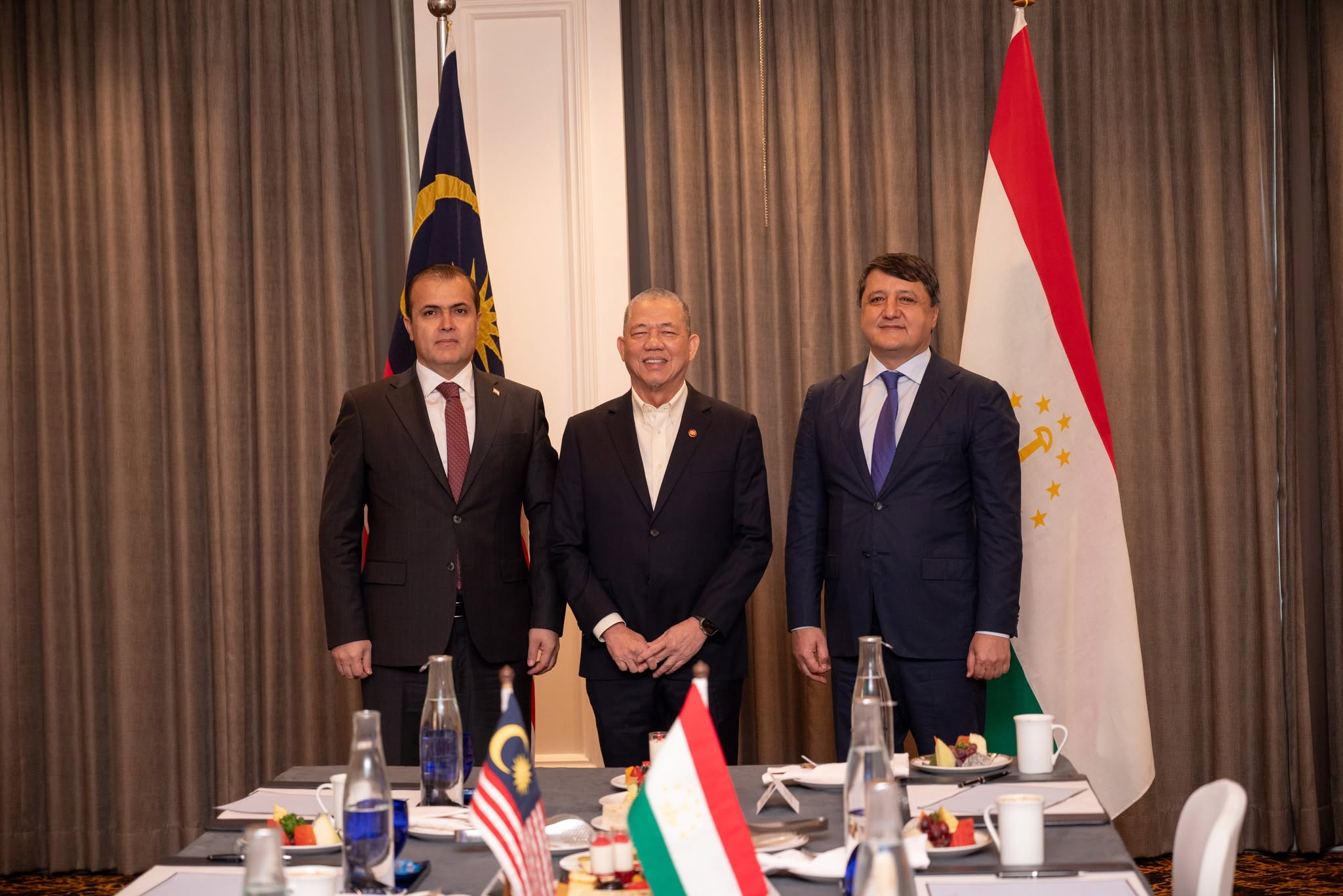
From left: H.E. Mr Sulton Rahimzoda, Chairman of Tajikistan Investment Committee, H.E. Dato’ Sri Fadillah Yusof, Deputy Prime Minister of Malaysia & H.E. Mr Sherali Kabir, Minister of Industries & New Technologies
Modest trade, significant untapped potential
One of the clearest indications of unrealised potential is the current scale of trade.
In 2024, Tajikistan’s total trade turnover with Malaysia, Indonesia and Thailand exceeded USD 11.4 million. In 2025, that figure almost doubled to more than USD 20.2 million. Yet for economies with substantial complementary strengths, these volumes remain modest.
Low trade volumes, however, should not automatically be interpreted as evidence of limited opportunity. They also reflect insufficient awareness among business communities, geographical distance, logistical constraints and the absence of sufficiently developed commercial networks.
The task, therefore, should not simply be to announce an ambitious trade target. It should be to create the conditions in which trade can expand naturally, sustainably and on a commercially viable basis.
Tajikistan has opportunities to increase exports of agricultural products, fresh and dried fruits, honey, textiles, minerals and processed goods. Malaysia, for its part, can supply machinery, electrical and electronic products, pharmaceuticals, medical equipment, food products, digital solutions and other industrial goods.
Yet trade in goods alone is unlikely to transform the relationship.
A more strategic approach would be to use investment, technology transfer and joint production to create new and more durable economic linkages.
This is where the complementarity of the two economies becomes particularly evident.
Tajikistan possesses significant hydropower resources, mineral reserves, agricultural potential and opportunities for industrial development. Malaysia brings capital, technology, management expertise and strong capabilities in manufacturing, financial services, food processing, the halal economy and digitalisation.
Bringing these strengths together could move the relationship beyond a conventional buyer-seller model toward one based on investment, production partnerships and the joint implementation of projects.
From trade to investment & joint production
Renewable energy is an obvious area of potential cooperation.
Tajikistan has considerable hydropower resources and continues to expand its clean-energy capacity. Malaysian companies could participate in this sector not only as investors, but also as providers of engineering expertise, equipment, project management, energy-efficiency solutions and green financing.
Water-resource management offers a closely related opportunity. Modern irrigation systems, water-saving technologies and supporting infrastructure could become another area where Tajikistan’s natural resources and practical experience are complemented by Malaysian technologies and expertise.
Agriculture presents similar possibilities.
Tajikistan already produces fruits, vegetables, cotton, honey and other agricultural commodities. The greater opportunity, however, lies in increasing value added before these products reach international markets.
Investment in cold-chain infrastructure, modern packaging, processing facilities, certification and efficient logistics could turn a larger share of agricultural output into higher-value, export-ready products.
Malaysia’s experience in food processing and the halal industry is particularly relevant in this context.
Rather than treating agriculture, food processing and halal certification as separate sectors, they could be developed as part of a single value chain: production in Tajikistan, processing and certification to international standards, followed by access to wider consumer markets.
The same logic applies to textiles and mineral resources.
Tajikistan is increasingly seeking to move away from the simple export of raw materials toward higher value-added production. Malaysian capital and technology could contribute to the development of textiles, mineral processing, construction materials, pharmaceuticals and other industrial sectors.
Recent agreements on the establishment of textile clusters with international consortiums — valued at more than USD 300 million in October 2025 and approximately USD 100 million in July 2026 — illustrate the kind of integrated investment model that can support industrialisation, job creation, technology transfer and export development. These projects cover the entire production chain, from cotton processing to finished textile products.
This project-oriented approach is especially important. One commercially successful investment project can often do more to attract further investors than a large number of general promotional events.
Malaysia’s strength in the halal economy & Islamic finance
One of the areas where Malaysia has particularly relevant expertise is the halal economy.
Malaysia is internationally recognised not only for halal certification, but also for the broader ecosystem that supports it: standards, laboratory infrastructure, food production, professional training, logistics and market development.
For Tajikistan, cooperation in this area could go well beyond certification itself.
A stronger halal production ecosystem could help agricultural and food-processing enterprises improve standards, increase value added and access wider international markets.
The commercial logic is straightforward: combine Tajikistan’s agricultural potential with higher levels of processing and Malaysia’s expertise in halal standards and market development.
Islamic finance could further strengthen this process.
Malaysia’s experience in Islamic banking, sukuk, takaful and Shariah-compliant investment instruments creates opportunities to develop financing mechanisms for infrastructure, agriculture and private-sector development.
Such cooperation does not need to begin with large-scale projects. Institutional partnerships, technical exchanges and pilot initiatives could first establish the necessary knowledge, confidence and operational experience before moving toward larger investments.
Building direct business links
One of the main obstacles today is that the business communities of the two countries still know relatively little about each other’s markets.
For a Malaysian company unfamiliar with Tajikistan, broad information about investment opportunities is not enough. Investors need a clear understanding of legislation, taxation, financing, logistics, incentives, potential local partners and, above all, how a specific project can be implemented in practice.
Tajik companies face a similar challenge when approaching Malaysia. They need a better understanding of Malaysian standards, distribution channels, certification requirements and market expectations.
This makes institutional support particularly important.
The State Committee on Investment and State Property Management of the Republic of Tajikistan, relevant ministries and investment institutions can assist companies in entering and navigating the Tajik market. Free Economic Zones can provide additional opportunities for manufacturing and export-oriented projects.
The Embassy of Tajikistan in Malaysia can also play a practical facilitating role by linking businesses with the appropriate government agencies, institutions and potential partners.
On the Malaysian side, chambers of commerce, industry associations, investment institutions and business networks can help introduce Tajikistan to companies that may not yet have considered Central Asia as a market or investment destination.
Business forums and trade missions remain useful, but their focus should increasingly shift from general promotion toward specific sectors, companies and projects.
The objective should be a clear progression: from introduction to feasibility study, from feasibility study to partnership, and from partnership to implementation.
Connectivity is more than transport
Geography will inevitably continue to influence bilateral relations.
The absence of direct transport connections increases costs and complicates both passenger movement and commercial activity. More efficient multimodal routes, expanded air-cargo services and, over time, more convenient passenger links could support trade and tourism.
Yet connectivity should be understood in a much broader sense.
Banking links are essential for companies to conduct transactions efficiently. Digital connectivity allows businesses and institutions to cooperate regardless of distance. University partnerships create intellectual connectivity. Tourism builds social familiarity.
For two countries separated by thousands of kilometres, these different forms of connectivity reinforce one another.
The digital sector is particularly important because geography matters far less. Malaysia’s experience in fintech, digital banking, cybersecurity and e-government could have practical value as Tajikistan continues its digital transformation.
The same is true of professional services, education and knowledge transfer.

The beautiful city of Dushanbe
The human foundation of bilateral relations
Political relations can provide the foundation and economic cooperation can give the partnership practical substance, but people-to-people links are what can make it durable.
Education is particularly important.
Malaysia has established itself as an international education hub. Greater cooperation between universities, expanded scholarship opportunities, student exchanges, joint research and professional training could help create a new generation of Tajik specialists with direct experience of Malaysia.
The impact of this goes well beyond education.
A student who spends several years in another country gains not only a qualification, but also an understanding of its institutions, society and professional culture. Over time, such individuals can become natural bridges between the two countries in business, government, academia and other fields.
Cultural cooperation can play a similar role.
Tajikistan and Malaysia have different historical experiences and distinctive cultural traditions, yet both societies attach strong importance to family, hospitality, education and cultural heritage.
Cultural programmes, exhibitions, literature, academic exchanges and cooperation in the arts can help societies that still have limited direct exposure to one another develop greater mutual understanding.
This matters because durable international partnerships are rarely built by governments alone. They become far stronger when businesses, universities, professionals, students and citizens build their own connections.
Tourism as both diplomacy & business
Tourism sits naturally at the intersection of the cultural and economic dimensions of bilateral relations.
Tajikistan’s mountains, lakes, cultural heritage and adventure-tourism potential offer a distinctive proposition for Malaysian travellers. The development of services adapted to the needs of Muslim tourists could make the country even more attractive to the Malaysian market.
Malaysia, in turn, is already recognised not only as a tourism destination, but also as a regional centre for education, healthcare and business.
Greater two-way tourism would have an impact far beyond direct tourism revenues. It would increase awareness, stimulate business contacts and gradually reduce the psychological distance between the two societies.
Tourism promotion, educational exchanges, cultural programmes and better air connectivity should therefore be seen as interconnected parts of a broader people-to-people strategy.
From bilateral relations to a wider regional bridge
Malaysia–Tajikistan cooperation also has a wider strategic dimension.
Malaysian companies should not view Tajikistan only as a standalone national market. Tajikistan is part of Central Asia, a region where demand is increasing for infrastructure, energy, food, technology and modern services.
For Malaysian companies seeking international diversification, Tajikistan can therefore serve as one additional gateway into the wider Central Asian market.
Malaysia can offer Tajikistan a similar opportunity in the opposite direction.
As an advanced ASEAN economy with extensive international commercial networks, Malaysia can become an important platform for Tajikistan’s deeper engagement with Southeast Asia.
Bilateral relations can therefore become more significant than present trade figures might suggest. They can serve as one of the channels through which Central Asia and Southeast Asia develop stronger economic, institutional and people-to-people ties.
This process, however, will not happen automatically. It will require sustained political attention, better connectivity, greater business confidence and, crucially, several successful projects that demonstrate the commercial value of bilateral cooperation.
The next five years: from potential to presence
The most meaningful objective for the next five years should not simply be to increase the number of agreements signed. It should be to create a more visible and tangible presence of each country in the other.
Politically, this means maintaining regular high-level dialogue and deepening institutional cooperation.
Economically, it means expanding trade, but even more importantly, attracting Malaysian investment, establishing joint ventures and implementing partnership projects in Tajikistan, while creating new channels for Tajik products and companies to enter the Malaysian market.
A small number of successful flagship projects in renewable energy, food processing, textiles, mineral processing, the halal industry or digital technologies could significantly alter business perceptions and demonstrate what the partnership can achieve.
At the same time, expanded educational, cultural and tourism exchanges would give the relationship a human dimension that cannot be measured by trade and investment figures alone.
The political, economic and cultural dimensions of the relationship should therefore not be developed separately.
Political trust should create opportunities for economic cooperation. Economic cooperation should generate durable common interests. Education, culture and tourism should allow relations to move beyond government institutions and build stronger direct connections between societies.
After more than three decades of diplomatic relations, Malaysia and Tajikistan already possess the political foundation necessary for a deeper partnership.
What is needed now is greater connectivity, more direct engagement and a stronger focus on implementation.
The real measure of progress will not be how many meetings are held or how many documents are signed. It will be whether Malaysian and Tajik companies invest and implement projects together; whether students and professionals exchange knowledge more frequently; whether tourists discover new destinations; whether institutions build lasting partnerships; and whether the people of the two countries come to know and understand one another better.
If that transition is achieved, Malaysia–Tajikistan relations can evolve from friendly but still underutilised ties into something more consequential: a practical partnership linking two increasingly important regions of Asia — Central Asia and Southeast Asia.
An Interview with His Excellency Ardasher Qodiri, Tajikistan Ambassador to Malaysia

His Excellency Ardasher Qodiri
Tajikistan – Malaysia: Perspectives on Economic and Trade Cooperation
How would you describe the current state of bilateral relations between Malaysia & Tajikistan?
Malaysia–Tajikistan relations can be described as warm, stable and increasingly forward-looking. Since the establishment of diplomatic relations in 1992, our two countries have developed a strong foundation based on mutual respect, shared interests and constructive engagement. The second round of bilateral political consultations, held in Putrajaya in September 2025, demonstrated the commitment of both governments to deepen cooperation across political, economic, investment, energy, education, tourism and cultural fields.
At the same time, I believe the relationship is entering a new and more practical phase. Political relations are good, but the full economic potential has yet to be realised. There is considerable scope to expand trade, encourage Malaysian investment in Tajikistan and develop partnerships in hydropower and renewable energy, water management, agriculture and food processing, halal industries, digital technologies, education, healthcare and tourism.
Tajikistan can serve as a gateway for Malaysian businesses seeking access to Central Asian markets, while Malaysia offers Tajikistan valuable expertise, technology, investment and stronger connectivity with ASEAN. Recent diplomatic and business engagements indicate that both sides are increasingly focused on transforming goodwill into concrete projects and measurable economic outcomes.
Overall, I would characterise the relationship as politically strong, economically promising and strategically well positioned for significant growth in the coming years.
What are the key priorities for strengthening trade and economic cooperation between Tajikistan & Malaysia?
The key priority is to transform the strong political goodwill between Tajikistan and Malaysia into practical commercial partnerships and measurable economic results.
First, we need to expand and diversify bilateral trade. At present, trade remains below its potential and is concentrated in a limited range of products. Greater cooperation between trade-promotion agencies, chambers of commerce and the private sector could help identify market-ready goods. Tajikistan can increase exports of agricultural produce, dried fruits, textiles, minerals and processed products, while Malaysia can supply machinery, electrical equipment, medical products, digital solutions and halal-certified goods.
Second, attracting Malaysian investment into Tajikistan should be a major priority. Promising sectors include hydropower and renewable energy, mining and mineral processing, agriculture and food processing, tourism, infrastructure, information technology and the establishment of joint manufacturing enterprises. These sectors are consistent with Tajikistan’s national investment priorities and with the areas discussed during recent bilateral engagements.
Third, we should develop cooperation in the halal economy and Islamic finance. Malaysia possesses internationally recognised experience in halal certification, Islamic banking, sukuk, takaful and the development of integrated halal ecosystems. Tajikistan could benefit from Malaysian expertise in establishing standards, building institutional capacity and helping Tajik products enter wider Muslim consumer markets.
Fourth, improving connectivity is essential. As Tajikistan and Malaysia do not share a direct transport corridor, businesses face higher logistics costs and longer delivery times. We should explore more efficient air-cargo and multimodal routes through regional transport hubs, while also working towards direct or more convenient passenger air connections. Better connectivity would support trade, tourism, business exchanges and educational cooperation.
Fifth, both countries should strengthen the institutional framework for economic cooperation. This could include regular meetings of an intergovernmental economic mechanism, business councils, investment forums, trade missions and direct engagement between banks and financial institutions. Businesses also require accessible information on regulations, taxation, investment incentives, potential partners and available projects.
Finally, cooperation must be driven by specific projects. Rather than focusing only on general agreements, we should identify a limited number of commercially viable flagship initiatives—particularly in renewable energy, water technologies, food processing, halal industries and digital services—and support them from initial feasibility studies through financing and implementation.
These priorities reflect the sectors identified by both governments during the September 2025 bilateral consultations, including trade and investment, agrocommodities, green energy, halal industries, finance, tourism, aviation, education and capacity building.
Generally, the objective should be to build a complementary economic partnership in which Malaysia serves as an important gateway for Tajikistan to ASEAN, while Tajikistan provides Malaysian businesses with access to emerging opportunities in Central Asia.
Which sectors in Tajikistan offer the greatest opportunities for Malaysians businesses & investors?
Tajikistan offers Malaysian businesses and investors opportunities across several sectors where the country’s natural advantages and development priorities align well with Malaysia’s expertise.
The first is renewable energy, particularly hydropower and solar power. Tajikistan possesses substantial hydropower resources and is expanding its clean-energy capacity, transmission infrastructure and energy-efficiency programmes. Malaysian companies could participate through investment, engineering services, equipment supply, project management and green financing.
The second major area is agriculture and food processing. Tajikistan produces fruits, vegetables, cotton, honey and other agricultural products, but greater investment is required in modern irrigation, cold-chain systems, packaging, certification and value-added processing. Malaysian expertise could help transform agricultural products into export-oriented goods, including halal-certified food products for markets in Central Asia, ASEAN and the wider Muslim world. Agriculture and food processing are recognised among Tajikistan’s principal areas of growth potential.
A third promising sector is mining and mineral processing. Tajikistan has significant mineral resources, while the government is seeking greater investment in local processing rather than simply exporting raw materials. Opportunities exist in exploration, modern mining technologies, processing facilities, equipment supply and environmentally responsible resource management. Mining was one of the priority sectors presented directly to Malaysian counterparts, and it remains among Tajikistan’s fastest-growing industries.
Manufacturing and industrial development also offer considerable potential. Malaysian investors could establish joint ventures in textiles, garments, construction materials, electrical products, consumer goods, pharmaceuticals and agro-industrial production. Tajikistan offers access not only to its domestic market but also to the broader Central Asian region, while local production can reduce import dependence and create new export capacity.
Another important area is the digital economy and financial services. Tajikistan is prioritising digitalisation, telecommunications, electronic commerce, digital public services and the modernisation of trade procedures. Malaysian companies have relevant experience in fintech, digital banking, cybersecurity, e-government solutions and Islamic finance. These capabilities could support Tajikistan’s economic modernisation and improve its integration into regional and international markets.
There are also opportunities in tourism and hospitality. Tajikistan’s mountains, lakes, cultural heritage and adventure-tourism potential remain relatively underdeveloped. Malaysian businesses could contribute through hotel investment, tourism management, destination marketing, professional training and the development of Muslim-friendly tourism services. Tourism is formally listed among Tajikistan’s priority investment sectors, and a bilateral tourism cooperation agreement has been under consideration.
I may add Malaysian companies could explore projects in water management, transport and logistics, healthcare, pharmaceuticals and education. These sectors require new infrastructure, technology transfer, professional services and human-capital development.
On the whole, the strongest opportunities are those that combine Malaysian capital, technology and managerial expertise with Tajikistan’s natural resources, young population and strategic location. The most effective approach would be to focus on several commercially viable flagship projects, supported by feasibility studies, reliable local partners and sustained engagement between the two governments and business communities.
Bilateral trade remains relatively modest. What steps are being taken to increase trade and attract more business partnerships?
You are absolutely right: bilateral trade between Tajikistan and Malaysia remains modest, but both countries recognise that the current figures do not reflect the real potential of the relationship. In 2024, total bilateral trade amounted to approximately US$3 million, demonstrating the need for more systematic engagement between government institutions and the private sector.
Several practical steps are being pursued to address this.
First, the two sides are strengthening the institutional foundation for economic cooperation through bilateral consultations, official visits and closer engagement among ministries, investment agencies, chambers of commerce and trade-promotion organisations. These mechanisms help identify obstacles, exchange information on investment policies and establish priority sectors for cooperation.
Second, greater emphasis is being placed on direct business-to-business engagement. Business forums, trade missions, sector-specific meetings and matchmaking sessions can connect Malaysian companies with reliable Tajik partners and present commercially viable projects. The objective is to move beyond general discussions and create a concrete pipeline of investment proposals, joint ventures and supply contracts.
Third, both countries need to diversify the range of traded products. Tajikistan has the potential to supply Malaysia with dried and fresh fruits, agricultural products, honey, textiles, minerals and selected processed goods. Malaysia, in turn, can expand exports of electrical and electronic products, machinery, medical equipment, pharmaceuticals, food products, palm-oil-based products and digital technologies. Malaysia is already pursuing greater export diversification towards emerging markets, including Central Asia, which creates a favourable environment for stronger engagement with Tajikistan.
Fourth, efforts are required to improve market information and business awareness. Many companies in both countries remain unfamiliar with available opportunities, regulations, potential partners and investment incentives. Establishing dedicated business information platforms, organising regular investment presentations and increasing cooperation with Malaysia and Tajikistan investment and export-promotion institutions would help close this information gap.
Fifth, logistics and financial connectivity must be improved. The absence of direct transport links and limited banking relationships increase the cost and complexity of trade. Both sides should therefore explore efficient multimodal transport routes, stronger air-cargo connectivity, correspondent banking arrangements and appropriate trade-finance instruments.
Finally, the most effective way to build confidence is to implement several flagship projects. Successful joint ventures in areas such as renewable energy, food processing, halal industries, digital services, tourism or light manufacturing would demonstrate that the partnership is commercially viable and encourage other companies to enter the market.
Overall, the focus is increasingly shifting from diplomatic goodwill to economic delivery. The next stage should be measured not only by the number of agreements signed, but by increases in trade volume, investment flows, joint ventures and long-term partnerships between Malaysian and Tajik companies.
How can Malaysian companies enter the Tajik market and what support is available for foreign investors?
Malaysian companies looking to enter the Tajik market can take a practical, step-by-step approach. The most effective starting point is to identify a commercially viable sector and establish direct contact with Tajikistan’s investment authorities, relevant ministries, business associations and potential local partners.
The State Committee on Investment and State Property Management of the Republic of Tajikistan serves as one of the principal government institutions supporting investors. It provides information on priority sectors, investment projects, regulations and opportunities, and facilitates interaction between investors and relevant government agencies. Tajikistan currently identifies sectors such as energy, industry, agriculture, transport, tourism, finance, IT and digitalisation, and the green economy among its investment priorities.
For Malaysian companies, I would recommend three main entry routes. The first is establishing a local company or representative presence. The second is forming a joint venture with a Tajik partner, which can be particularly useful for understanding local market conditions, distribution networks and regulatory procedures. The third is participating directly in larger investment projects through investment agreements, public-private partnerships or project-specific arrangements with the Government.
There are also opportunities within Tajikistan’s Free Economic Zones, particularly for manufacturing and export-oriented businesses. These zones offer a special regulatory and customs environment, including important tax and customs incentives for qualifying enterprises and equipment.
For larger strategic investments, the Government has demonstrated its willingness to work directly with investors through specific investment agreements. A recent example is the July 2026 agreement for an approximately US$100 million textile cluster, covering the value chain from cotton processing to finished textile products. This illustrates the type of project-based approach available to substantial investors.
At the bilateral level, the Embassy of Tajikistan in Malaysia can also play an important facilitation role by connecting Malaysian companies with government institutions, investment agencies and potential business partners in Tajikistan. Likewise, cooperation with Malaysian institutions such as MICCI, MCMTC, other chambers of commerce and sectoral associations can help companies assess opportunities before entering the market.
Most importantly, Malaysian investors should not view Tajikistan only as a market of around twelve million people. It should also be considered in the broader context of Central Asia, a region of more than 120+ million people, with growing demand for infrastructure, energy, food, technology and modern services.
Our objective is therefore to make market entry as practical as possible: help Malaysian businesses identify the right projects and partners, facilitate engagement with the relevant authorities and accompany serious investors from the initial discussion through to implementation.
For Malaysian companies interested in Tajikistan, the message is simple: come, explore the opportunities, identify the right local partners and engage with us. We are ready to facilitate that process.
What potential do you see for cooperation between Malaysia & Tajikistan in the halal industry, including halal food, certification & Islamic finance?
Malaysia and Tajikistan have strong potential to develop cooperation in the halal economy. Malaysia is internationally recognised for its expertise in halal certification, standards, food production, Islamic finance and related services, while Tajikistan has strong agricultural potential and access to the growing markets of Central Asia.
One important area is the development of halal-certified food production and exports, including meat, dairy products, processed foods, fruits and other agricultural products. Malaysian expertise could also support Tajikistan in strengthening halal certification systems, standards, laboratories and professional training.
There is also significant potential in Islamic finance. Malaysia’s experience in Islamic banking, sukuk, takaful and Shariah-compliant investment could support new financing mechanisms for infrastructure, agriculture and private-sector development in Tajikistan.
Cooperation in the halal sector could help Tajik producers access wider international markets while creating new opportunities for Malaysian companies, financial institutions and halal-industry specialists in Tajikistan and the broader Central Asian region.
Are there any upcoming agreements, trade missions or investment initiatives aimed at boosting economic ties between the two countries?
Yes. Both sides are working to create a more active framework for trade and investment cooperation. The focus is increasingly on facilitating direct contacts between business communities, organising business forums and trade missions, promoting investment projects, and encouraging joint ventures in priority sectors such as energy, water management, agriculture, food processing, industry, tourism and the digital economy.
We also see potential for closer engagement between Tajikistan’s investment institutions and Malaysian organisations, chambers of commerce and sectoral associations. This could include targeted business delegations, B2B meetings and investment presentations in both countries.
In addition, Tajikistan is organising a series of international industrial and investment forums in Dushanbe during the second half of 2026, providing Malaysian companies with an opportunity to explore projects and establish direct partnerships, particularly in textiles, mining and mineral processing, industrial development and technology transfer.
At the bilateral level, recent discussions between Tajikistan and Malaysia have specifically emphasised expanding trade, creating investment opportunities and supporting joint ventures in key sectors.
The next important step is to translate these initiatives into concrete projects and, where appropriate, strengthen the bilateral legal and institutional framework to provide businesses with greater confidence and predictability.
How can greater tourism & people-to-people exchanges contribute to stronger business & investment relations?
Greater tourism and people-to-people exchanges can make an important contribution to stronger business and investment relations because they help build familiarity, trust and long-term connections between our two countries.
When businesspeople, students, professionals and tourists travel more frequently, they gain a better understanding of the local market, business culture and opportunities. This can reduce uncertainty and make companies more confident about exploring partnerships, joint ventures and investment projects.
There is also significant potential to promote Tajikistan in Malaysia as a destination for mountain, eco, cultural and adventure tourism, while encouraging more Tajik visitors to experience Malaysia’s tourism, education and business environment.
Improved air connectivity, easier travel arrangements and more direct exchanges between universities, chambers of commerce, tourism operators and professional associations would further support this process. Business delegations, trade fairs, cultural events and educational exchanges can often create relationships that later develop into commercial partnerships.
In this sense, tourism and people-to-people exchanges are not only about cultural understanding. They can also serve as an important bridge for trade, investment, education and broader economic cooperation between Tajikistan and Malaysia.
What message would you like to share with Malaysian businesses that may be unfamiliar with Tajikistan as an investment destination?
My message to Malaysian businesses is simple: Tajikistan deserves a much closer look as an emerging investment destination.
Tajikistan offers a combination of natural resources, a young and growing population, competitive production potential and a strategic location in Central Asia. The country is actively seeking foreign investment and partnerships in sectors such as renewable energy, hydropower, mining and mineral processing, agriculture and food processing, textiles, tourism, digital technologies, infrastructure, healthcare and the halal economy.
For Malaysian companies, Tajikistan can offer more than access to its domestic market. It can also serve as a platform for exploring opportunities across the wider Central Asian region, where demand for infrastructure, energy, food products, financial services, technology and modern consumer goods continues to grow.
Malaysia has strong capabilities in areas that are highly relevant to Tajikistan’s development priorities, including industrial technology, Islamic finance, halal certification, food processing, renewable energy, digital services, education and professional management. This creates a natural complementarity between the two economies.
Of course, entering any new market requires proper due diligence, reliable local partners and a clear understanding of regulations and commercial conditions. This is why we encourage Malaysian companies to visit Tajikistan, meet government institutions and local businesses, participate in investment forums and examine specific projects directly rather than relying only on secondary information.
The Embassy, investment authorities and relevant institutions in Tajikistan are ready to facilitate these contacts, provide information and help serious investors connect with appropriate partners and projects.
I would therefore encourage Malaysian businesses to view Tajikistan not only as a new market, but as a long-term strategic opportunity. Companies that enter early, build strong local relationships and bring technology, expertise and value-added production may be well positioned to benefit from the country’s future growth and from the broader economic development of Central Asia.
Looking ahead, what is your vision for Malaysia – Tajikistan economic & trade relations over the next five years?
Over the next five years, I would like to see Malaysia–Tajikistan economic relations move from a modest level of trade to a much more structured, diversified and investment-driven partnership.
The first objective should be to significantly increase bilateral trade by widening the range of products exchanged and creating more direct links between Malaysian and Tajik companies. At the same time, we should aim to develop several flagship investment projects in areas where our economies are highly complementary, including renewable energy, agriculture and food processing, mining and mineral processing, textiles, digital technologies, tourism, halal industries and Islamic finance.
I also see strong potential for Malaysia to become an important economic partner for Tajikistan in ASEAN, while Tajikistan can provide Malaysian companies with a practical entry point into the wider Central Asian market.
To achieve this, we need more regular business missions, investment forums, B2B & P2P engagement, stronger cooperation between financial institutions, better logistics and air connectivity, and closer interaction between investment and trade-promotion agencies in both countries.
Most importantly, the relationship should become increasingly project-oriented. Success should be measured not only by agreements and official visits, but by higher trade volumes, new joint ventures, Malaysian investments in Tajikistan, technology transfer, jobs created and stronger private-sector partnerships.
My vision is that, within five years, Malaysia and Tajikistan will have a much more visible economic presence in each other’s markets and will have established a practical, long-term partnership linking Central Asia and Southeast Asia.
Explore Tajikistan: A Journey into the Heart of Central Asia


